
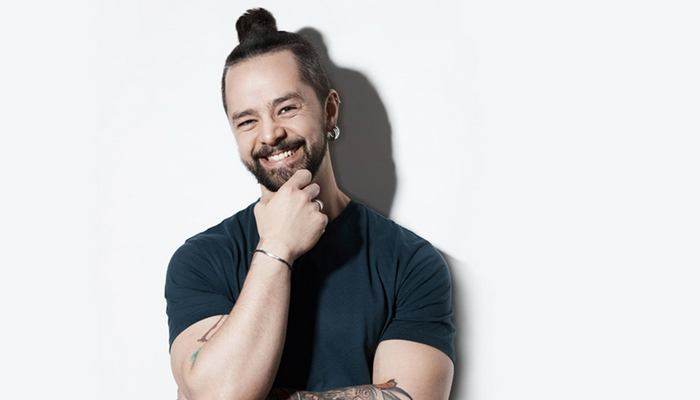
Ronan Diego, Health and Fitness Director of Mindvalley, explores explore a future where true fitness transcends aesthetics. We move beyond simple muscle-building to examine a holistic philosophy of well-being that integrates the body, mind, and our fundamental connection to nature. The discussion uncovers the science behind ancient practices like grounding, reveals how human’s physical state directly dictates our mental performance and emotional resilience, and offers practical systems for sustainable health.
Coherent exposition of the discussion
1. The modern urban lifestyle disconnects us from a fundamental natural resource — the earth. Immersion in a world of skyscrapers, multi-level parking lots, and elevators creates a situation where people can go months without physically touching the ground with their bare feet. This loss of direct contact is not just an abstract idea but a concrete change in the environment we inhabit. For someone accustomed to “grounding,” the difference is felt immediately as a loss of stability and physical strength.
2. “Grounding” can be considered as a physiological process with scientific basis. Contact of the soles of the feet with natural surfaces (grass, sand, earth) allows the body to absorb free electrons from the Earth’s surface. These electrons help neutralize reactive oxygen species (free radicals), which are produced in excess during stress and inflammation. Thus, simply walking barefoot acts as a powerful natural antioxidant, reducing systemic inflammation in the body.
3. The practical benefits of grounding are research-backed and can be a tool for enhancing productivity. Scientific experiments show that even 20 minutes of grounding after intense physical exertion can reduce muscle soreness by 25-35%. For a business professional, this is a direct path to faster recovery, reduced stress levels, and consequently, preserved mental clarity and energy for decision-making. This is “biohacking” accessible to everyone, requiring no financial investment.
4. Health is evolving — we are moving from narrow fitness to holistic well-being integrating body, mind, and nature. The trend in health and fitness today is not just about building muscle or losing weight. It is a conscious return to fundamental, “natural” practices: sunlight, movement, clean water, quality sleep, and contact with nature. This integration is becoming the new standard for an effective and sustainable lifestyle to achieve long-term goals.
5. “Biohacking” and technology are a compromise for city dwellers, but they do not replace nature. For those living in megacities, technological solutions exist: grounding mats, red light lamps, dawn simulators. The speaker estimates they provide about 50-70% of the benefits of real contact with nature. A key drawback of technology is that it creates an additional “task” and planning stress, whereas nature provides its benefits naturally and effortlessly.
6. Neglecting the body directly affects mental abilities, productivity, and personality. While volunteering and fully dedicating himself to a project, Ronan abandoned workouts, sleep, and nutrition. The result was chronic fatigue, irritability, procrastination, and an inability to focus. Returning to healthy habits literally restored his former energetic, focused, and positive personality, proving a direct link between physical state and effectiveness.
7. The fitness journey should transform from a goal (an attractive body) to a tool (expanding life’s possibilities). Ronan‘s initial motivation (gaining mass for a tattoo) later turned into an unhealthy obsession with appearance. The realization came when he understood that the true purpose of fitness is not to restrict life for a perfect body, but to use the body as a partner and tool for greater life experience, travel, energy, and self-expression.
8. The desire to look good is normal and should not be taboo, but it should not become the sole and all-consuming goal. Cultural attitudes often demonize caring for appearance as narcissism. However, it’s important to be authentic: if you like how you look and perceive your body as art, that’s healthy motivation. Problems begin when this desire is repressed into the subconscious and begins to unconsciously drive behavior, or when it completely overshadows all other aspects of health.
9. Muscle mass is a critically important organ for health and longevity, not just an aesthetic attribute. During contraction, muscles release myokines—signaling molecules that act like “emails” for the entire body. They strengthen bones, cleanse the cardiovascular system, stimulate the brain to produce new neurons, combating neurodegenerative diseases. Ignoring strength training due to stereotypes about “meatheads” is a direct risk to quality of life in older age.
10. How working with the body can save one from severe depression and pseudo-dementia. Ronan‘s father, who never cared for his health, developed severe inflammation due to visceral fat, leading to deep depression with dementia-like symptoms. In just three months of working on nutrition and introducing light physical activity, he lost 14 kg, recovered completely mentally and physically. His “outlook on life” changed radically—from a person expecting death, he transformed into someone joyfully planning a world trip.
11. Body, mind, and emotions are a single interconnected system. Problems in one aspect can have solutions in another. Experience showed that attempts to solve focus and productivity problems (mind) using only mind-based methods (time management, coaching) didn’t work. What helped was impacting the body (exercise, sleep, nutrition). Conversely, physical ailments can sometimes stem from unexpressed emotions. The modern approach is often too reductionist, whereas a holistic, systemic view is needed.
12. The future of fitness lies in integrative practices that simultaneously train the body, mind, and emotional intelligence. An example is Flow Training, combining strength exercises, breathing techniques, qigong, yoga, and meditation in one flow. It trains not only muscles but also the capacity for concentration, mindfulness, and managing internal state. This approach prepares a person for all daily challenges—both physical and mental.
13. Life balance is not a static equilibrium of all spheres, but a dynamic process where different areas “blossom” at different times. Attempting to give strictly equal attention to all life spheres (work, health, family) is unnatural and leads to burnout. It’s more accurate to view balance as a dynamic system: in one period you focus on career, maintaining health and relationships at a minimal but sufficient level; in another, priorities shift. The key is to prevent complete neglect of any key area.
14. The key to consistency is creating a routine that covers the basic needs of all health aspects without unnecessary decisions. To avoid losing focus on a main goal (e.g., career), it’s important to have a simple, repeating morning or evening routine. It should automatically give the body movement, the mind — mindfulness, and emotions—release. This reduces cognitive load (“no need to decide what to do every day”) and provides systemic support, against which you can effectively work on key priorities.
15. The skill of “reading your internal weather” is a fundamental self-management tool for a leader. Several times a day, pause for 10-20 seconds, close your eyes, and check: which muscles are tense, how are you breathing, what emotions dominate. This instant diagnosis allows you to detect accumulated stress before it turns into a mistake or conflict. For a leader, this is a skill for managing their energetic and emotional state, directly affecting decision quality.
16. The immersion strategy is an effective method for quickly mastering new skills in any field, including health. When you want to understand a topic (e.g., breathing techniques), create an “information bubble” around yourself: make a thematic playlist of podcasts, follow experts on social media, focus all your learning time on it. Such complete immersion for 1-2 weeks allows a quick transition from zero to competence and forms a clear action plan.
17. Moments of “non-action” and light physical activity are often catalysts for creativity and solving complex problems. Evolutionarily, our brain solved complex problems (e.g., tracking prey) best during breaks between periods of light physical activity. Today, such a “reset” can be a walk, washing dishes, or a bike ride. Instead of banging your head against a wall trying to find a solution at your desk, it’s often more effective to switch to a simple physical activity — and the answer may come on its own.
18. Democratizing knowledge about the body, translating complex science into understandable analogies and practical systems. Using the analogy of a mechanic father (“you need to know the basics of how your car works”), Ronan sees his task as giving people a basic understanding of how their body works. This allows them to consciously collaborate with specialists, notice malfunctions in time, and take responsibility for their health, moving it from the category of “mystery” to “manageable system.”
19. Systematic approach to health in an organization: creating a “faculty” of knowledge where everyone can master skills step-by-step. In his role at Mindvalley, Ronan works as a “dean of the health faculty,” building a curriculum. He identifies key areas (nutrition, sleep, movement), attracts the world’s best experts to create courses, and structures learning from basics to advanced practices. This is a systematic response to modern individuals’ demand for structured, scientifically-backed knowledge.
20. Conclusion: Investing in holistic body health is not a departure from productivity but its foundation and main resource for realizing ambitions. Ronan’s father’s story is a vivid metaphor: a body burdened with inflammation stole his mental clarity and desire to live. Working with the body returned both. For a business professional, this lesson is critical: your energy, resilience, creativity, and ability to make complex decisions are not a given, but a direct result of how you “maintain” your biological system. This is the most important infrastructure investment you can make.
 A.Life