
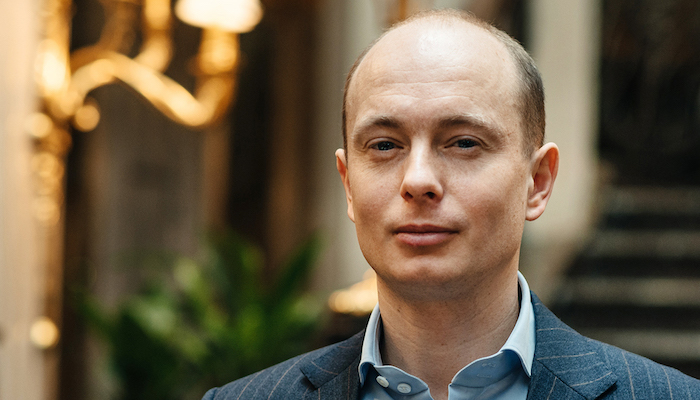
Alexey Krivoshapko, Director of Prosperity Capital Management, talks on the prospects of retail business in the context of crisis, on freezing prices on socially significant products, and on how business is coping with the anti-sanctions.
Transcript of the interview
– Today we will talk about retail, mainly food retail. My guest is Alexey Krivoshapko – Director of the Retail Market at “Prosperity Capital Management”, one of the leading Russian hedge funds. Alexey is widely known in narrow circles. In fact, he is one of the leading analysts on the retail market. And that’s not even my assessment, but the assessment of colleagues and the industry. We will start with the story about the price freeze, which retail companies and retailers brought upon themselves – about 10 of the largest chains got involved in this.
And just a couple of hours ago, Deputy Head of the Federal Antimonopoly Service Andrey Kashevarov stated that the FAS approves the decision of retail chains to freeze prices on 20 socially significant goods. I will quote: “We are not saying that there are signs of collusion here, since the chains themselves choose the product groups which they define for themselves and fix prices on them.” That is, there is a certain list of 20 products, but the chains themselves decide which of them they freeze, and moreover, it might be a different decision in different regions. Nevertheless, I cannot shake the feeling that this is collusion. How can one assess the FAS’s position here?
Alexey Krivoshapko: Let’s assess not the FAS’s position, but assess the events and common sense. If you go to a “Magnit”, “Dixy” or “Pyaterochka” store, you will understand that there are 3-4 thousand items on the shelves. If you get it into your head to go to some hypermarket and look around, you might find 20-30 thousand there. And it’s clear that there are 500-800 items that are high-turnover – some poultry carcass, eggs, bananas, i.e., things that generate high revenue. And there are things that the average consumer looks at prices for. Of course, there are not 20 of them, but many more.
And one must understand that throughout all 15 years of the existence of modern food retail, the main thesis on which it got on its feet, crawled, and now has swollen to unprecedented sizes – was that the chains should be cheaper than everything else in price, for those items that people pay attention to. Then there are many psychological questions: what to pay attention to, who, when, whether one can show some prices cheaply and sell others expensively – many subtleties. But in general, the rapid rise of the chains is related to the fact that indeed over a fairly long period they managed to get very good terms from large national and local producers. And these terms improved every year, because they provided large and growing sales, took away headaches: why not sell to this or that stall – shipped to the warehouse, and then there are no sales problems.
And overall, the chains were and remain significantly cheaper than traditional retail. That is what they rode out on and continue to ride quite quickly across the country. When we think about whether prices are high, low, get into these discussions – what drives them, where they come from. Here one must understand a simple thing: prices are set not by the chains, but by consumers. The times when you bought for 100, sold for 140 and lived on the 40 – they are long gone. Despite the fact that it seems there are few stores – competition is quite strong. And quite often 2-3 stores are already within a radius of 500-700 thousand meters. And that means that people really look at prices. And if you talk to the general director of a large chain, then once a week or once every 3-4 days he looks at a price report and compares their prices and competitors’ prices for these important items, there are more than 20 of them – there are 500-800. And he sets himself a certain kind of range, beyond which he does not want to go compared to these competitors. And these competitors include markets, “Romashka”, “Nezabudka” stores.
– The so-called “corner store”?
Alexey Krivoshapko: Yes. Those that operate on a simplified tax system, pay no taxes and keep the VAT in their pocket. Prices are compared against all of them. And the task of any chain, whether they came out to the FAS or to the world with a statement or not – is always to be in the market. Therefore, what you are seeing now is a PR action, powerful, coordinated. It is simply a statement that we care. But that’s not the point. The point is that these 20 items, maybe it’s nice that the price of a Tula gingerbread might also be 24 rubles for the next 2 months. But it has already increased. So this is simply a reaction from the chains to public indignation, which is indignant about serious inflation.
– The PR side of this story is clear. I would like to clarify further that there are such assessments that this slightly violates antimonopoly legislation, and that even if it’s not about raising prices, but about freezing them – it is still collusion, and it still has a negative effect in that it has a negative vector precisely for corner stores, for non-chain stores, which cannot afford to freeze prices, and thus, under the flag of saving fellow citizens and this PR, it is actually strangling competitors.
Alexey Krivoshapko: Let’s go back two steps. Step number one: the role of corner stores, those owned by proprietors, where the owner manages and receives his income not through dividends, but simply by taking money for gas or rent at the end of the month, they will always exist, they exist all over the world. Often they are in suboptimal premises – those where a store cannot unload, in basement premises. People who work with what they have – 82 meters in a semi-basement with three twists and turns – a chain simply won’t set up there, it’s inconvenient for them from a store construction point of view. They will always exist. They had a big advantage – they didn’t pay taxes. They still have it.
Over 15 years, the price at “Magnit” compared to the price in this corner store has fallen by about 15 percent. This is an advantage that was passed on to the consumer. We used to be able to buy “Klinskoe” beer for 14 rubles, and now we can buy it for 11.5. Why? Because “Magnit” grew, and now we can buy more beer or chocolate there. One must understand that the effect of the growth of retail chains leads to prices overall decreasing in the country. So let’s figure out what we are talking about. I repeat: naturally, in all markets where price is an important factor, people who make decisions on sales and volumes always look at each other’s prices. But the fact that following a 5 percent increase in vodka prices due to an excise tax increase – is that collusion? No, it’s a normal reaction to the excise tax being raised. Don’t look for a cat where it isn’t. These 20 items – are a poultice for a dead man. They don’t carry any significant sales volume. These are PR actions to calm down indignant deputies. The fate of small stores is entirely in their own hands. And all they can do is offer better service, because they cannot compete on volume and quality.
– Some time ago, people started talking about how large chains have moved into the corner store segment, “Azbuka Vkusa” has been very actively developing this in Moscow, “Perekrestok” has been doing this for a long time. Having finally occupied part of the hypermarkets and large stores, they started to take an interest in this niche, and this story with the price freeze is a continuation of this plot.
Alexey Krivoshapko: There is no connection. I think that for these stores with an area less than 200 meters – that is where chains do not set up from the point of view that it is suboptimal. For them, a much more serious category, which brought the majority of income and profit, has always been alcohol and tobacco. And here one must understand that a large part of what brings them money is illicit goods. So here too one must keep in mind that this bottle of vodka sold in the “Cheburashkin” store – the excise tax on it is not paid with a 90% probability.
– Everyone has their own advantages. Now regarding the very effect of the price freeze, because our Russian and world practices say that price freezes, imposed by the state, usually lead to two effects: the disappearance of this product and its shortage, and to the fact that when the freeze is lifted, prices immediately make up for what they missed, and this turns out even worse, because they would have grown gradually, but this way they grow immediately by a serious percentage.
Alexey Krivoshapko: We are in February. Even according to Rosstat data, which underestimates the effect of what happened, because data from the chains are a bit different, they are more aggressive, even according to Rosstat data, food prices have increased by 8-9% over the last 3 months. In reality, it’s 15. After this increase, you can hold prices for a couple of months. Your gross margin from 30 on these 20 products will become 24 – so what?
– I understand that it’s not very significant. But I’m trying to understand, this novelty, that it’s not the state freezing, but the chains themselves freezing – what effect could this have?
Alexey Krivoshapko: There will be no effect.
– Then let’s put a period here. Everyone got what they wanted: the chains got PR, citizens got care from the chains for a whole 2 months, and the FAS is happy and sees no collusion here. But still, the forecasts for the retail industry this year are quite sad, extremely sad: the Ministry of Economic Development expects a decline of 8.2% in retail trade turnover – that’s more than in 2009, when it fell by 5%. That’s a record in our new history. Do you agree with this assessment?
Alexey Krivoshapko: I somewhat disagree here with the following. Talking now about any real numbers is pointless, because people live in a nominal world, receive nominal rubles on their Sberbank or some other bank card, check nominal prices. This real figure adjusted for inflation, which could be 12, or could be 17 – is of no interest to anyone. Inflation is a significant economic factor of recent decades. Once the average house in Britain cost 12 thousand pounds after the war, and then suddenly 420 thousand 30 years later. What the hell are real prices?
The fact is that, of course, there is no great opportunity for salary increases in private sector companies. Because export prices are not rising, but even falling – oil is in the minus, fertilizers in a small minus. Huge volume growth is also not visible, because the industry is at 100 percent capacity. The effects from investments come slowly, and there is no money – banks closed financing. So it’s clear that economic growth this year will definitely be with a “minus” sign, but what exactly – also unclear: 3, 2, 4. That’s also some average figure, a statistical average between the production of felt boots, shoes, oil and sewing machines. But not strongly positive.
When you have no opportunity to sell something at higher prices, no opportunity to increase production, everyone starts scratching their head and asking: by how much will we raise salaries? The answer is that on average across the board, the corporate sector will raise salaries by 4-6%, the public sector probably won’t do anything at all.
– Official forecasts say that salaries will also fall by almost 10%.
Alexey Krivoshapko: Let’s break it down into parts. Let’s step away from the word “real”, because it’s all very… what was the real price growth for refrigerators over the last 5 years? Negative. For TVs? Negative. For cars? Negative. It’s a meaningless phenomenon. Let’s operate with nominal categories, nominal rubles. We are all spoiled by the fact that oil prices grew, lending grew, and everyone’s nominal salaries grew – by 15-20%, such – unearned. And then due to low inflation – by 7-10%, and everyone was proud of them. And the fact is that salaries will not be raised by more than 5-6%. This would have happened regardless of what the exchange rate was. This was more or less coming last year.
Probably, huge growth in extraction or output won’t happen either. The only sector where some increase of something is possible – is retail, chains will open. Probably, it’s some easily exported goods like coal or metal, which benefit from a weak ruble. Terrible unemployment growth also won’t happen. In nominal numbers +5. That’s because people borrowed something and need to pay. And there is a not small share of consumer loans, which, when they continued to be issued – there was a boost, that one deflated in the second half of last year. That also added 2-3% to nominal sales growth, mainly in all sorts of non-food things like electronics, cars.
All these consumer loans and credit cards – they added. And there is no more capital to issue, so this +5 – will lead to people unlikely to increase savings much. No one is bringing money to deposits at a terrible speed, but one can withdraw a little. What we saw in 2008 – that people withdrew a little to spend. Probably, there will be retail sales in rubles +6. Then people will try to vary between how much the price of what they like has grown, and they are ready to accept it and that there are some alternatives. This is not our answer to EU sanctions, but simply related to the fact that there was a local shock in the meat market. Russia is a large consumer and still an importer of meat. And all these meats are not connected: beef, pork, chicken – people easily switch.
– And processing switches just as easily.
Alexey Krivoshapko: Processing switches more easily than individuals, as practice shows. And the negative volume effect from price growth is evident there. And there will be some game, where people will gradually adapt. A person comes and sees that lemons cost 400 rubles. “I don’t need a lemon,” the person will say and leave. And in his average check next month there will be no lemons. There will be some such adjustment, it won’t be one-time, it will be gradual. But from this +5 – we will have approximately the same growth in total trade turnover.
Probably, there will be more in food, because people are unlikely to deny themselves things they are used to. And there will be less in non-food – clothing and electronics will clearly suffer, as we saw in 2008. There, maybe it will be 0, and in food +8. What inflation will be after that – who the hell knows. Right now it’s about 18-20 percent. What is +8 and -20 – that’s -12 in your beloved real terms. But the figure is meaningless, because all chains and non-chains report and account for, earn nominal money and pay nominal taxes.
– So, ultimately, despite the forecast and figures being negative, in nominal terms we will see even a small growth. Overall, one should not expect serious cataclysms in the retail business, a market limit or serious shifts due to general difficulties?
Alexey Krivoshapko: As in any crisis, weak players will fall away. We saw how in 2008, two fell away from among electronics retailers. If we talk about food, then no overly indebted players are visible, everyone more or less conservatively assessed their capabilities, and few companies have net debt/EBITDA greater than 3. Overall, everyone has ruble debts. I think our entrepreneurs understood that the trick with cheap foreign currency debt works for some time and once. It’s clear that people might slightly pause expansion, but on the other hand, maybe it will be for the best.
I don’t see anything dramatic in food. All the major players we communicate with and whose shares we hold, they continue to open stores at a terrible speed. And I think that, probably, real estate will become more accessible, because many players from the non-food market will definitely free up space, they will look more carefully at the locations they have. Overall, supply should increase. It won’t benefit the market, but nothing radical will happen.
In non-food, the situation is more complicated, because many are very sensitive to +5 or 0, some have a currency component for rent. Although, I think that it too will turn into ruble quite quickly, because the exchange rate movement was quite strong. Overall, I don’t think anything radical will happen with the corporate sector. These are not the changes that lead to serious shake-ups.
– That figure that the mayor cites – is one that does not reflect the real situation, does not reflect what we should really expect. I wanted to talk also about imports, which are suffering from all sides intentionally and unintentionally. In January, food imports already fell by 40%. And, apparently, this dynamic will more or less continue for the rest of the year. At the same time, my personal impression as a consumer is of some great instability: something suddenly disappears, something suddenly appears from some hitherto unseen production, some Uruguayan mozzarella. Why it needs to be brought from Uruguay – is unclear, when we already make it here and, probably, it’s no worse than Uruguayan, although Italian is probably still better. Or something suddenly turns out to be terrible quality: some rotten potatoes in a place where they were normal, etc. Are these results of restructuring, we need to adjust now – and we will live as before in terms of products and assortment we are used to? Or do we need to get used to this, that we’ll have to search for something, not find something, and something will unexpectedly appear?
Alexey Krivoshapko: Let’s take three steps back and remember what and why we import. Structurally we still import meat – with beef it will be endless, because the beef cycle is long and few started it, and it’s a terribly expensive business.
– “Miratorg” promises to flood everyone with its beef with terrible force and very soon.
Alexey Krivoshapko: I strongly doubt it. They will earn money, they will cover part of the market, but the market is much larger than what they plan to do. In pork and poultry the country will be self-sufficient in the near future, most likely. But due to beef, of course, there will be flows. All fish, because objectively. A huge amount of vegetables, probably about 70 percent. A huge amount of fruit. This is all for natural reasons. And some dairy products in small amounts. Overall the numbers are impressive. There’s nothing terrible about this, because some investment cycles for some product cycles are simply long.
Suppose “Magnit’s” greenhouses are standing, they’ve been huffing for 2 years already, but haven’t yet reached normal results, but probably there will be an 8-year payback – that was huge money. And they will locally provide for themselves in one category by 40%. The desire of Russian entrepreneurs to invest in potato storage, in tomato production greenhouses – it’s not very connected to sanctions. They just want to earn money – they go there. I have many acquaintances who invested in things that have absolutely no significance, but simply because they liked it. The same will happen over time in agriculture. Simply because the country is huge and needs to be supplied – it just needs a lot of money.
In pigs it took 7 years, despite the state burning money right and left, through subsidies created an inflated price in the market so that local producers earned more. In the end, we paid twice: through high prices and through the budget. Simply no one thinks about it. We are structurally – still an importer, in general. Although, overall, in terms of land quantity, in terms of production potential, Russia has fantastic potential for exporting agricultural products. Simply it’s not realized, because management in the agricultural sector is appalling, and it’s spoiled by subsidies and import duties. We import and only just “Magnit”, “Dixy”, “Lenta”, “Metro” established supply chains, when Spanish apples perfectly traveled in trucks for two days, went through customs like everything: bam – and they close the border for them.
When some granny in a stanitsa near Bryansk could buy Spanish peaches for 42 rubles in February – that was a real achievement of a market economy. And they closed that opportunity for the granny under some political sauce. And, naturally, they had to look for something else. And this process, when 10-15% of our assortment – that’s big money, that’s a large number of counterparties, contracts, checks – it’s serious work. When overnight this is crossed out, you naturally have to look for a replacement. First you find rubbish for 2 times more expensive, put it on the shelf. People come and are surprised: how come – they were 42, and now 90 and bad. We all noticed these unpleasant adjustments. And I hope that common sense will prevail, and all these stupid sanctions against a close exporter of quality products, the European Union, which really sells good things at a very sensible price and guaranteed quality, will be lifted, and we will start getting all this back.
– Right now, there is suddenly talk in the Duma about possibly canceling them. Dmitry Gudkov started this talk, whose initiatives are not usually accepted. But nevertheless, they say that in “United Russia” there were voices in support, saying let’s cancel. As I imagine it: now they will cancel, and the whole process will go backwards again – again conclude contracts with old importers anew or will it be possible to return quickly and easily?
Alexey Krivoshapko: Let’s be honest. I think that part of what is brought here – is brought anyway: there were Polish – became Serbian, simply Serbia unexpectedly became a large producer of, for example, peppers. Or like Belarus exported some solvent by millions of tons. Simply someone earns on this, and we pay for it. I hope that common sense will prevail and the normal supply chain, close to us, will return, and we will definitely get goods of normal quality.
– If this decision is made, how quickly will all this normalize?
Alexey Krivoshapko: 2 weeks.
– Excellent. That’s very encouraging. But at the same time, not in connection with sanctions, but in connection with devaluations, in connection with all other economic problems: rates and so on, I understand that importers- intermediaries are experiencing big problems, especially in vegetables and fruits – there are a large number of bankruptcies of companies that couldn’t cope with the new conditions. Will another quickly come to their place or will this chain change so that the chains will import themselves?
Alexey Krivoshapko: Overall, now the chains are already about 30 percent of the market, with a tail. In some categories they are already more. The things they bring, they simply aren’t available anywhere else. I’ll give you an example of some peaches in the capital of Makhnovia. Overall, I think the example of “Magnit” and “Dixy”, which went into direct import and thus ensured volumes, good price, returns and quality. The other retailers will follow. Of course, there is independent retail – it gets something from people who bring it to them in “Zaporozhets” cars from some Georgia. That will always be the case, and that’s normal. I think that large volumes in such categories will simply go to the chains. That’s normal, because they have the ability to transport with their own transport. “Magnit” brings bananas by ship, for example. That is a function that banana importers used to have, who all went bankrupt. But that’s a normal process.
– And such super-concentration, won’t it negatively affect competition, price, etc.?
Alexey Krivoshapko: Some retail chain, looking at its traffic numbers in some city, looks at how its banana prices compare with the others. If for some reason “Magnit” enters a price war, then they will have to respond. Prices will drop, and people will win. No need to reinvent the wheel. The best example I remember is 2008. And the lowest food inflation was in St. Petersburg, where the share of chains by that moment reached 50-60%. In Poland, hypermarkets and discounters dropped inflation to 2% in 3 years. These are rational economic agents, they try to minimize their costs and consumer costs in order to pull higher volumes. Therefore, only a person who does not understand how the market works can resist this.
– By the way, returning to the beginning of our conversation about the price freeze, there is an argument that in this way we will help the state in the fight against inflation with this price freeze. Is this just talk or can it have some effect? Since these goods, on which prices are frozen, are included in the basket used to assess inflation.
Alexey Krivoshapko: You yourself still don’t know, did they freeze pomegranate juice, Tula gingerbreads, or eggs…
– There are 20 goods, a list.
Alexey Krivoshapko: Are there “Chelnochek” sushki there?
– No sushki. Some types of meat and poultry, fish, butter and sunflower oil, milk, sugar, salt, etc.
Alexey Krivoshapko: I repeat that a poultry carcass – is a product that everyone looks at prices for. A product on which the gross margin in chains is 3% in any case. They froze/didn’t freeze – the markup on this item is still the lowest everywhere, because people buy it in large quantities. And that is what they measure prices by. Of course, some cut chicken breast as it was sold with a 35% markup – so it will remain.
– I see. Here too it’s more talk than action.
Alexey Krivoshapko: Of course, for someone in strained financial circumstances, this will help for a time. But one shouldn’t think it will have a huge effect.
On the lessons of retail and business in general
Alexey Krivoshapko, a partner at Prosperity Capital Management, on the lessons for business and retail after Sergey Galitsky sold his stake in Magnit. (source: incrussia.ru)
The state is becoming more entrenched in business. After the high-profile deal between Magnit and VTB, people are talking about it again. The economy is slowing down, there is no adequate lending. The best thing the state can do for entrepreneurs is to get off their backs and ensure conditions for competition in the banking sector (this will lower loan rates), believes a partner at Prosperity Capital Management (a minority shareholder of Magnit) Alexey Krivoshapko. He is convinced that owners of large companies urgently need to stop regularly reading reports on milk sales in Saransk and start looking at things strategically. In an interview with Inc., the analyst explained why you shouldn’t freak out when managing a company, what mistakes Sergey Galitsky made, and why the problems of business in Russia are not the state’s fault, but a lack of drive among entrepreneurs.
Galitsky and Magnit
— When the deal between VTB and Magnit became known, you reacted quite emotionally: called it “a spit in the face of shareholders.” How were investors’ interests harmed?
— Formally, VTB bought the largest block of shares. Russian law clearly states: if you buy more than 30%, you are obliged to make an offer to minority shareholders, because with a change of controlling shareholder, the strategy and everything else changes. In this case, it’s obvious that everything was deliberately done to avoid making an offer. Legal assessments will be given later, but in essence — this is utterly terrible behavior by both sides. Both Galitsky, who raised over $3 billion in real cash from the public market, and the bank VTB, which, as a public organization, should also care about its shareholders — not just the controlling ones (the state is the controlling one) but also the minority ones. If they had made an offer, VTB would have had to spend more money. A company that should be an example showed utterly terrible corporate governance. Magnit is the largest public company in Russia, the share of minority shareholders is almost 70%. VTB has fewer, but among the minority shareholders there are individuals, pension funds. If they had made an offer, they would have at least complied with the legal requirements.
— Would you have then bought back your shares?
— We would have decided. We would have met with them, listened to their point of view on the network’s development. Because all the announcements about Magnit starting to deliver groceries with Russian Post — that’s just some white noise, complete nonsense.
— What share of Magnit’s shares does Prosperity Capital Management own?
— We don’t disclose, but it’s tens of millions of dollars. The stake is not very large for our fund, not very large for the company, but overall it’s a lot of money.
— In your opinion, why did Sergey Galitsky decide to sell Magnit?
— I think the decision to sell was more emotional, it’s definitely not rational. It’s very hard to explain why a person who all this time, maybe not perfectly, but normally managed the company, and had enough dividends, suddenly said to himself: “Enough, I couldn’t handle it, I’m 50 years old — horror, nightmare, help, I’m selling to anyone.” And selling to VTB is exactly “to anyone,” because it’s the wrong price, the wrong buyer, and the wrong time.
I don’t really believe the public explanation ‘investors don’t agree with me’ — he didn’t give a damn about them all this time, did as he saw fit, and was right more than half the time.
— What should Galitsky have done in this situation?
— Everything Galitsky should have done in the next six months is to radically change the board of directors structure, which he didn’t have, and many decisions were centralized on him personally. When you centralize everything on yourself in such a huge company, the system can start to malfunction. In the last two years, Magnit’s revenue grew by about 25%, the company invested a huge amount of money in capital expenditures, and profit fell by 30%. That’s hard to call a good result. There’s a whole host of problems — it started with the departure of [Vladislav] Gordeychuk from the CEO position, competition intensified, and the structure Galitsky tried to build was suboptimal. Bottom line — the multiple is low, the price-to-earnings and EBITDA ratios are low, and the profit is the lowest. If you’re selling a company anywhere, the highest price is paid by strategic buyers in a competitive situation. Clearly, now is not the moment when they come running to our country waving flags and shouting “Let’s buy!”, but still, selling Magnit now is a miscalculation. Look at how Wimm-Bill-Dann or the Kalina retail chain were sold — for huge money in a competitive process among buyers (in 2011, PepsiCo bought the dairy and beverage producer Wimm-Bill-Dann for about $5 billion, and Unilever bought 82% of the cosmetics concern Kalina for 415 million euros (17.4 billion rubles) — Inc.).
On protecting investors’ rights
— What does this deal indicate?
— It reflects, first and foremost, a lack of proper work by the owner on structuring the company’s management. In a good market with a good CEO, Magnit was doing well. The market changed, the owner lost the CEO, didn’t build the mechanisms, didn’t understand what to look at, apparently started to interfere himself, freak out — and realized he wasn’t in control. This is a lesson for all owners of large businesses: at some point, you need to step back from regularly reading reports on milk sales in Saransk and start looking at things strategically. Many entrepreneurs have succeeded — for example, Alexander Tynkovan perfectly built the M.Video network and sold it for a lot of money.
— The market reacted to Galitsky’s departure with a drop in Magnit’s shares. Is this a temporary story?
— A very specific event occurred, to which people expressed a specific attitude. This is the most efficient market in the world: you get information, process it immediately, and press the button. This is how international investors assessed the prospects of Magnit in the hands of VTB — clearly worse than yesterday.
— And how do you assess them?
— VTB as a bank is not doing very well. It’s even funny to compare it with the same Sberbank in terms of return on capital, with nominal profit, with the asset base. And they have an answer for everything: “It’s not us, it’s the previous management, they bought so many bad banks and bad assets,” — and this song has been going on for 10 years already. They just work worse. Therefore, it raises questions how they will behave. If you can’t bring order to your core business, how are you going to dive into something much more complex, where you definitely understand nothing and where there is generally quite strong competition? VTB has experience owning industrial assets — for example, Tele2 — but they haven’t achieved great success there either, although they also announced with fanfare, songs, and dances how they would make the largest mobile operator. Tele2 continues to generate huge losses, so for now, the investment is quite questionable.
— What is Prosperity Capital’s plan in connection with the actions of Magnit and VTB? Will you file a lawsuit?
— We do not comment on possible legal actions. But in Russia, fortunately, we have one of the most progressive legislations regarding the election of the board of directors. Anyone who has 2% of shares can nominate a board member, and then there’s a normal competition between directors. We won’t have a farce like in Gazprom, where they all get elected among themselves. We will make every effort to get as many real directors on the board — after all, it’s the board that should manage the company. Yes, VTB has a 29% stake — but who said all the others will vote the same way they do? So it will be a normal working process. A strong board of directors works in a huge number of companies, and in this case, it’s God’s command to be strong.
On state participation in business
— After the sale of Magnit, many started talking about a trend towards the nationalization of business. And even about creating a “ministry of retail trade.” Is there such a trend?
— I don’t think so. After the sensational FAS report, which cited a figure of 70%, we calculated the share of state intervention in the economy and got 36-38%, the CSR […] got a bit more. It’s just that sectors emerge where this share is larger (oil) or smaller (retail, mobile communications, etc.). But what’s important here is how the company is managed, not who owns it.
— Are there examples of well-managed state-owned companies?
— Sure — Sberbank. When [Chairman of the Board Herman] Gref came there 8 or 10 years ago, the bank’s profit was around 200-300 billion rubles, and now it’s 800 billion rubles. The economy has grown during this time, but not that much — obviously, this is the result of work. Another example — the mining company ALROSA, or Aeroflot, which, overall, competing with Lufthansa and other international airlines, earns money. In Norway, why does the country manage to run Statoil normally? It does. Why can’t Russia normally manage its state-owned companies? The state can be an effective owner.
— But not everywhere is it effective. Quite the opposite.
— Not everywhere. There are sectors where there is complete horror — for example, the financial sector. Wrong policies and poor supervision led to banks from the top ten collapsing — money was simply stolen from there, and the Central Bank didn’t watch well over it. This cost us as taxpayers maybe a trillion rubles. And there, of course, competition is needed — because the private sector needs money, and when competition is limited, money is more expensive. The best thing the state can do is choose normal private investors, sell VTB to hell, sell Rosselkhozbank, which is neither agriculture nor a bank, sell BIN-Otkritie to the damn mother, and move on. The sooner this issue is resolved, the better it will be for the economy as a whole, because this also hinders normal business lending.
— How is the problem of high loan costs being solved today?
— This ailment passes with a decrease in inflation — credit becomes more accessible. People don’t want to take a loan at 24% to build a bakery, but at 12% they will have more enthusiasm. Currently, the spread of these rates is huge — a conditional Magnit borrows at 7.5%, and a conditional bakery at 18%.
— It’s significantly harder for a small bakery to survive, although it needs less money.
— Of course — because banks profile risks quite clearly and believe that if an organization is large and established, the risk of non-repayment is lower. But that’s fair, because that’s really how it is.
— What can help small business in this situation?
— Only competition among banks that provide services to small businesses. The difference in interest rates is determined only by competition and how well banks can perform scoring on the cost of risk. Roughly speaking, if seven banks give loans to bakeries, the rate won’t be 18% but 13% — because in the fight for a conditional entrepreneur Ivanov who wants to open a bakery, they will lower their required interest margin from, say, 10%, which it is now, to 6%. Banks now borrow at 4.5%, like Sberbank, from the cost of borrowing through deposits — and lend at 18%. 18-4.5=13.5%. That definitely covers all the risks of loan loss and others.
On the promotion needle in retail
— How do you assess the development of retail?
— With demand, everything is quite weak, because the economy isn’t growing worth a damn. Which is generally sad, because there have been two devaluations in the country. In food, everything is quite polarized. There are two players with a market share of around 10% — Magnit and X5 Retail Group, and generally, the “store near home” game has been played, a third can’t enter. In hypermarkets, there is some movement — Lenta is actively developing, Auchan. What Pyaterochka did four years ago with its relaunch is a strong move. But it seems to me that the promotion needle the company got itself hooked on is not the most correct. It undermines the strong side of the brand: a person is willing to pay for the brand, and when instead there are constant discounts, people get hooked on that. Moreover, it stimulates excessive consumption. In Russia, the share of sales on discount is almost the highest in the world: in Lenta hypermarkets, it’s over 50% — that’s a huge number.
— How else to develop stores with low consumer demand?
— Retail needs to engage in a more targeted and smarter approach to the customer — and there’s a lot of room for improvement there. So far, only hypermarkets have started doing this. Tailoring targeted offers to a person — there are much more opportunities for earning and satisfying customer needs here than just lowering the price of a brand of orange juice from 120 rubles to 80. Retailers have a huge amount of data — they need to analyze it correctly and make individual offers to customers. But it’s very difficult — because the product needs to be shipped, it needs to be in stock, it needs to arrive on time. But it still needs to be done. Of course, it’s easier to just lower prices — thinking, they’ll come running anyway.
— How can retail best use big data?
— It can be done through customer identification — they should pay using a unique payment method, for example a credit card or a special discount card. Then you need to analyze what they buy and try to offer them what they specifically need. The company knows well what a person buys, analyzes it, and puts forward some offers. And this absolutely leads to an increase in revenue per person — that’s a medical fact.
— What are the main problems of business today?
— I think it’s always the lack of drive in the entrepreneur, a shortage of desire to develop the business. That’s the main problem. Everything else is just whining about “expensive loans, sanctions, the state is squeezing.” If you have this drive — you will find a way to create a competitive product, because there are a huge number of free niches. Everything else is nonsense. Despite external obstacles, the decline in consumer demand, business can and should be developed. There are always sectors where it’s hard to compete, but there are also those where it’s easier to compete.
— What are those, for example?
— Everything related to a person’s spending out of their own pocket. In our country, people spend 65% of GDP out of their own pocket. You can always convince a person that they need to buy this T-shirt, these eggs, this game in the app store, or go to this movie. This is a huge market — almost 50 trillion rubles. In it, you can compete completely freely, and there are plenty of examples of how to do it better than others.
The Prosperity Capital Management fund was founded in 1996 by Swedish diplomat Mattias Westman. The company nearly went bankrupt due to the 1998 default — its assets shrank from $250 million to $35 million. The situation was rectified through trading on the commodities market. In 2009, the return of the Russian Prosperity Fund, managed by the company, reached 195.2% annually. Bloomberg agency then recognized the fund as one of the most successful in the world. Alexey Krivoshapko has worked at the fund since 2008, specializing in investments in the consumer sector, retail, real estate, and agriculture.
 A.Life